

TAKE ONE, May 2002, by James Forrester
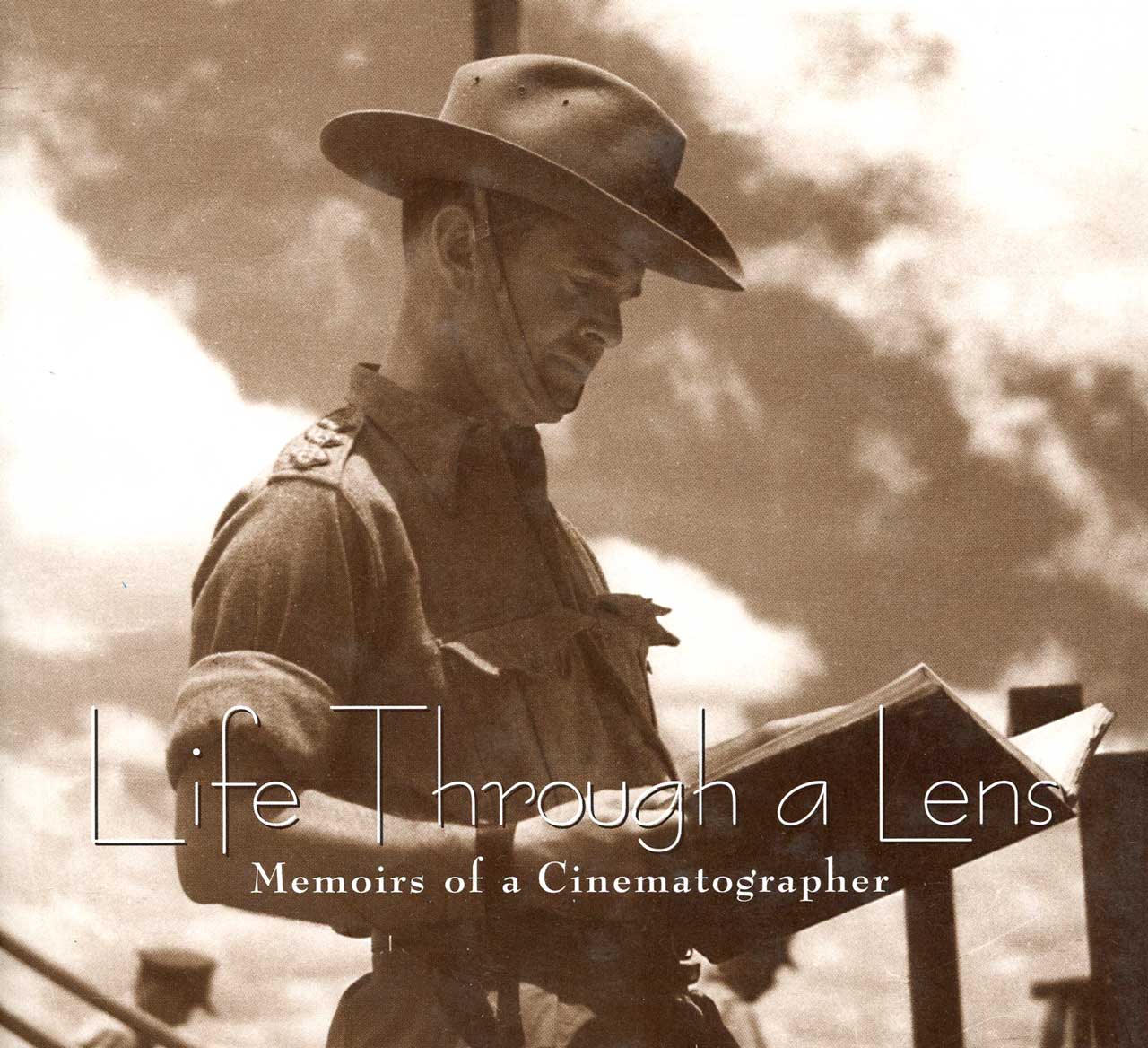
Memoir by Osmond Borradaile.
Edited by Anita Borradaile Hadley McGill-Queens University Press, 2001 $49.95
“Life through a Lens: Memoirs of a Cinematographer (book review)” by James Forrester was originally published in Take One, May 2002. Reprinted with permission of the author.
Life through a Lens is a record of a remarkable life. There are so few histories of cameramen – and their contribution to this visual medium is so integral – that a book like this is priceless. It serves as a wonderful resource for the thousands of young people studying film history and for those of us old enough to remember the films that Osmond Borradaile worked on.
Kevin Brownlow, the noted British film historian, neatly summarizes the obvious value of this volume in his cover comment. “This book would be noteworthy in itself simply for the fact that very few cinematographers left behind more than their body of work as testimony to their ability. Visual artists are not generally renowned for their skill with words.” However, ‘Bordie,’ as he was affectionately known, wrote an excellent memoir which deserves to reach a readership beyond the limitation of those interested in cinematography. Born in Winnipeg on July 17th, 1898, he details his early years in Alberta and British Columbia, a family tragedy prompting a subsequent move to California in 1915. It was his family’s financial need which motivated Borradaile to quit school and this led to his subsequent employment in the film laboratories of Hollywood.
Through persistence and a friendly reference, he started his film career as a camera assistant in Sam Wood’s Paramount Studio unit, shooting silent films with Gloria Swanson, Rudolph Valentino and Clara Bow. His personal interest in aviation led to work as a camera operator on the Howard Hughes feature Hell’s Angels, during the era when the name conjured up images of young men flying biplanes and not riding Harleys. After the advent of sound recording, he took advantage of an opportunity to work at Paramount’s European studio outside of Paris, where he was able to acquire sufficient feature film credits to become a director of photography. Paramount closed the studio in the middle of the Great Depression and moved its production facility to England, where Borradaile went to work for the Korda brothers at London Films.
During the 1930s and 1940s, Borradaile developed a reputation as “the greatest exterior camera artist in the world,” according to fellow Canadian, actor Raymond Massey. Many classic British features such as The Scarlet Pimpernel (1934), Elephant Boy (1937), The Drum (1938), Four Feathers (1939), The Thief of Bagdad (1940), The Overlanders (1946) and Scott of the Antarctic (1948) contain his exceptional scenic footage. All these productions required not only great skill as a cinematographer, but personal sacrifice and perseverance. There were no air-conditioned trailers, helicopters or canteen trucks on these expeditions. The chapter describing the shooting of The Drum in 1937, exemplifies the reality of second-unit work at that time. Borradaile and three assistants hauled an 80-pound, three-strip Technicolor camera, all their gear and 18,300 metres of temperamental stock over the Himalayas on pack mules. This was his first experience with shooting colour, and the early stock was very sensitive to heat, a major headache when the temperature could soar to 40 degrees Celsius.
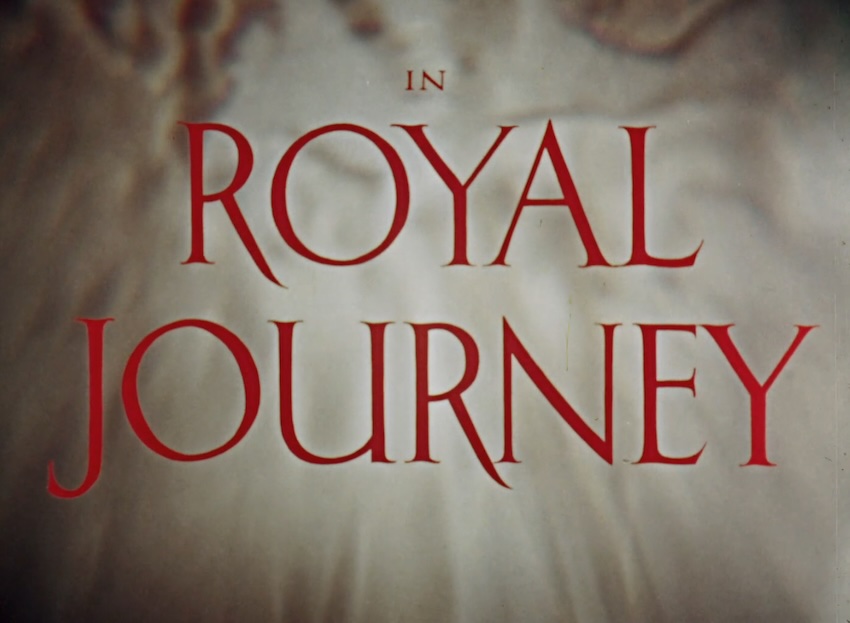
In 1950, he returned to Canada, settled in the Fraser Valley of British Columbia and declined further assignments from Hollywood or London. However, during the 1950s and 1960s, he accepted contracts to shoot several NFB shorts and a documentary feature, Royal Journey, covering Princess Elizabeth and the Duke of Edinburgh on a tour of Canada. The film was very successful and was shown in theatres. It won a British Film Academy Award as well as a Canadian Film Award for Best Feature Film in 1952 and holds the distinction of being the first feature film shot on Eastman colour stock.
The core manuscript was written when the author was in his 80’s and the original intent was to simply record his life experiences for his immediate family. More recently, his daughter, Anita Borradaile Hadley, edited the draft memoir, reshaping it into a more polished autobiography. Having worked on oral histories and anecdotal recollections myself, I realize what a delicate balancing act this process is. In the edition’s preface, she mentions that her “guiding principle throughout has been to let Bordie’s voice be heard.” In this she has done exceptionally well.
(Biographical notes)
– While living in Medicine Hat, Alberta, Borradaile saw his first movie at 7 years of age. According to his Independent obituary (written by UK film historian Kevin Brownlow) the film was shown in a Chinese restaurant where the silver nitrate film exploded, and the audience had to be evacuated.
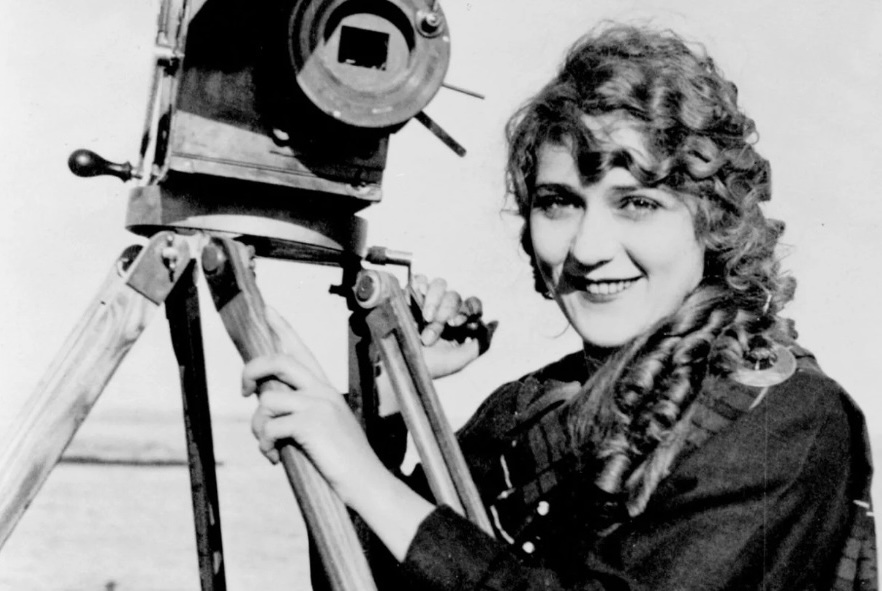
– After his family’s arrival at San Diego from Victoria, BC in 1915 he observed a film being shot titled A Girl of Yesterday, at the La Jolla Caves, which starred Toronto-born Mary Pickford and was directed by fellow Canadian Allan Dwan. This led to contact with a cameraman and work in a film lab.
– In 1916, he enlisted in the Canadian Expeditionary Force at Victoria BC and served in France as a gunner on the front lines, before returning to Canada.
– In Hollywood from silent days, often associated with the director Cecil B. DeMille. He started working as a cameraman in 1920, with Excuse My Dust.
– Latterly he worked in Britain, where he developed a reputation as an adventurer at heart (his peers called him the “Crazy Canuck”). He became a specialist in outdoor and nature cinematography, and often toiled under hazardous conditions enduring searing heat, locust plagues or being dive-bombed in the Mediterranean.
– He was behind the camera for the Sabu feature, The Four Feathers, which was nominated for a Palme D’Or at the Cannes Film Festival.
– Borradaile’s specialty was filming natural environments to serve as backdrops and stock footage.
– In 1928 he shot the aerial sequences for Howard Hughes’ Hell’s Angels (Hughes was his pilot), this being a precursor to the location and outdoor shooting that would become his trademark.
– In 1934 he shot Julian Huxley’s documentary, The Private Life of Gannets in Wales. The short film won an Oscar as Best Short Subject in 1938. The same year he was introduced to Aircraftsman Shaw “the nom de paix of Lawrence of Arabia” who wished to make a Revolt in the Desert film. (Shaw died the next year in a motorcycle accident).
– In 1939 Oscar nomination: The Four Feathers (1939 dir. Zoltan Korda) shared with Georges Périnal BSC.
– He was a Canadian cameraman, cinematographer, and veteran of WW II.
– In 1946 he journeyed to Australia to play a key role as Cinematographer of the wartime drama The Overlanders, for Scottish director Harry Watt.
– In 1948, Borradaile travelled to Antarctica to film sequences for Scott of the Antarctic, one of the most ambitious film projects of that time.
– In 1950, he retired from the feature film industry and moved with his family to the 80-acre Cheam Farm at Chilliwack, British Columbia, where he became a dairy farmer. However, he also continued working as a cinematographer on short documentary films, mostly for the NFB. Eventually he sold his farm and retired to Vancouver.
– In 1957, the BC Government commissioned him to make a documentary film commemorating the province’s centennial. The Tall Country was released in 1958 and won the Canadian Film Award for Best Theatrical Short Film at the Canadian Film Awards in 1959.
– In 1966, Robert Krasker BSC asked him to come out of retirement to shoot second unit on The Trap (1966 dir. Sydney Hayers).
– His final credit as a Cinematographer was for the 1971 country music feature film Travelin’ Light.
– In the 1970s BC filmmaker Keith Cutler recorded interviews with Bordie and encouraged him to write his career memoir, which was edited by his daughter and published by McGill-Queen’s Press in 2001.
– He was made an Officer of the Order of Canada in December 1982.
– In 1998 he was made a Chevalier de la Légion d’honneur by L’ordre National de la Légion a branch of the French government for his service in WWI.
– He died at West Vancouver BC on March 23rd, 1999, at the age of one hundred.
– British Society of Cinematographers lists Osmond Borradaile, BSC as “past full accredited” as a Cinematographer.
